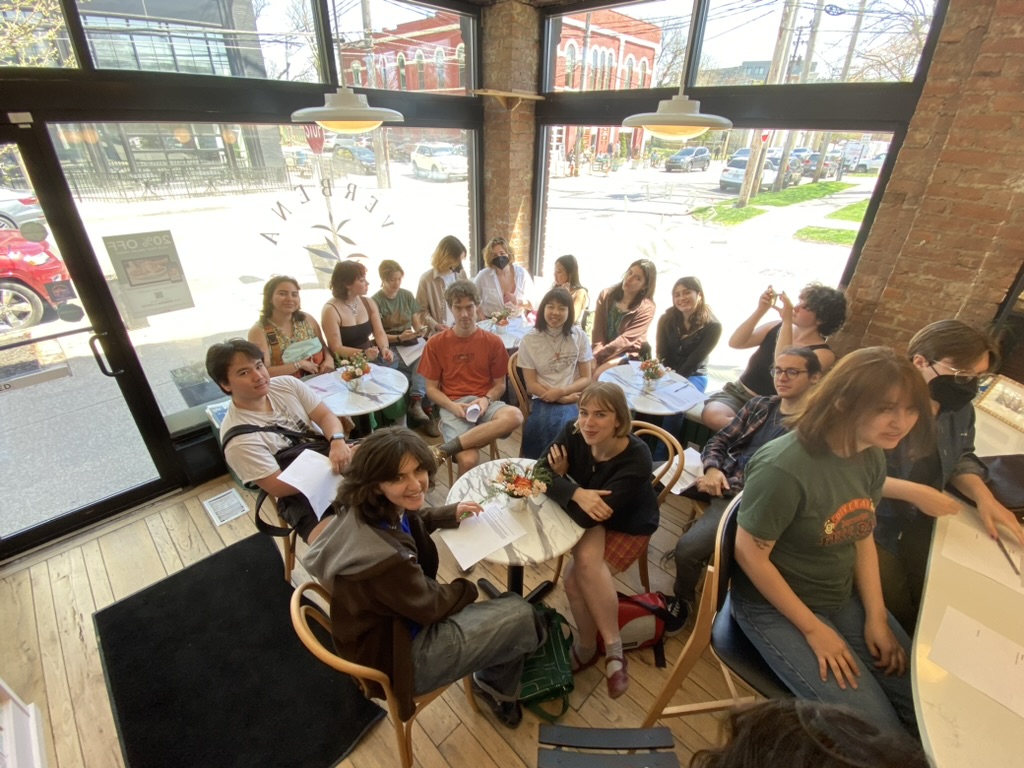
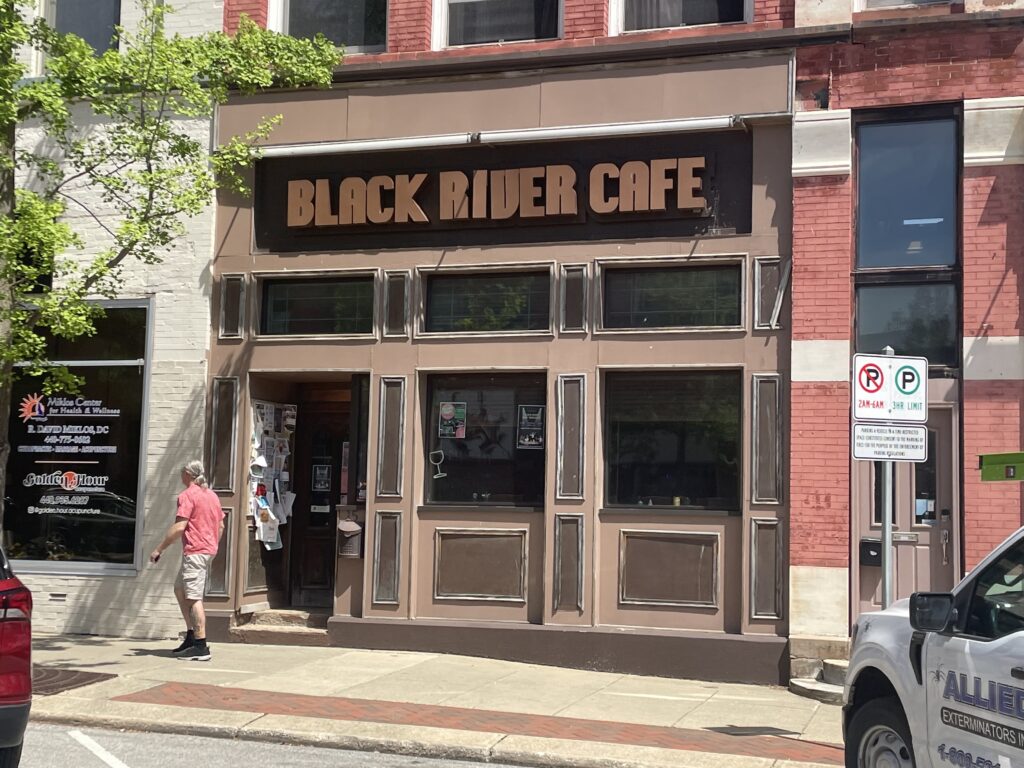
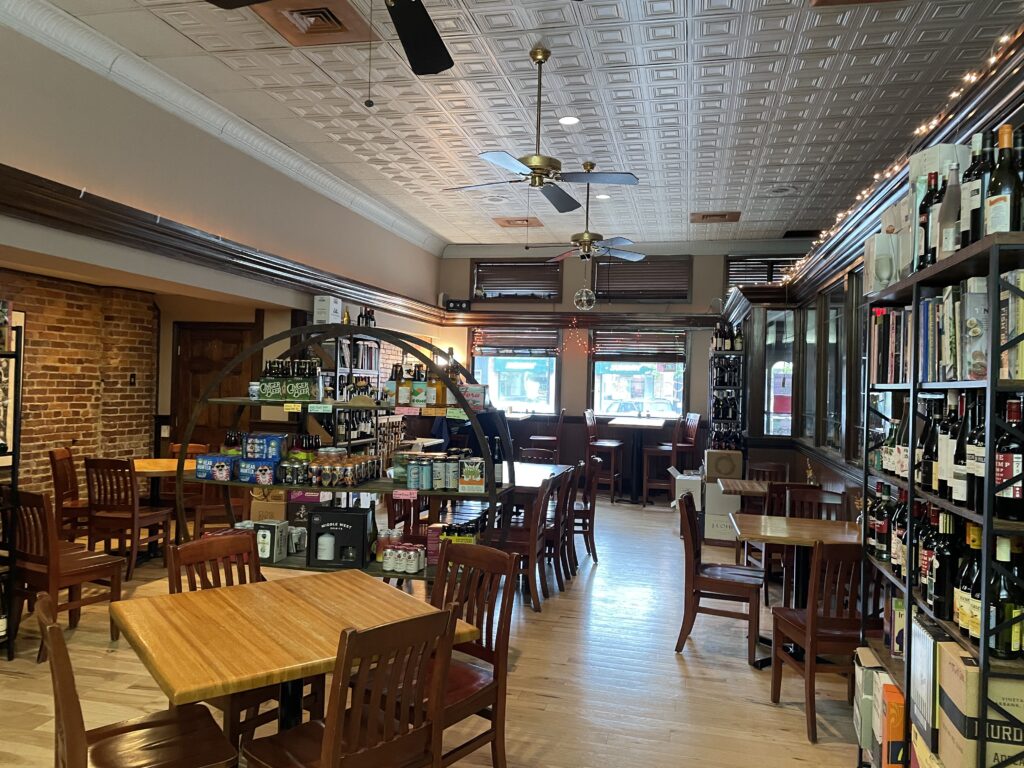
The Black River Cafe was flooded with natural light when we came to visit, at around three in the afternoon on a Thursday. The space was furnished with what must have been hundreds of cookbooks, bottles and boxes of wine, and six-packs of various beverages on bookshelves that lined the room. The layout of the space, with the bar tucked into the back, suggested that the purpose of Black River was much more than being a space to drink. Joe emerged from the back room, exchanging a few words with his solitary employee before approaching us. Joe was soft-spoken, very relaxed and seemed almost amused by us, the twenty-two twenty-somethings staring at him, waiting for him to tell-all. Though his demeanor was inviting, open body language accompanied by a lot of laughter, at some points it seemed as if he was tired of telling his story – again. Nonetheless, he answered all our questions with enthusiasm and sincerity. When asked about how he gets the word out about Black River, especially considering its unremarkable outward appearance and shifting hours, he simply replied, “I don’t market.” Some spaces don’t need marketing—they just need a loyal community of regulars. He often asked us after replying to one of our prompts if he had adequately answered a question – a characteristic demonstrative of his thoughtfulness. Throughout the interview, it became very clear how deeply Joe cares about the community he’s integrated himself into over the past thirty-odd years.
Oberlin class of ‘98, Joe graduated with a degree in Environmental Studies. Who would have thought that he would wind up as a small businessman working in restaurants, cafes, and wine bars? Well, during his time at Oberlin, Joe took a year off from his studies to manage the coffee shop that would become The Feve as Oberlin students know it now.
“I was a young college kid who was very interested in the restaurant culture and I really appreciated working for the Feve and… I was a diligent worker and they asked, ‘do you want to manage our restaurant?’ I was like sure, I’ll drop out of college and do that. So I did. I dropped out of college.”
As simple as the decision sounds, Joe’s prowess in the restaurant business was clear, and being appointed manager proved to sow the seeds for his future career. Joe eventually returned to the College, and did get to finish his Environmental Studies degree, which came into use later. Just out of college, he opened up the first iteration of Black River. Initially, the Black River Cafe, named for the Black River watershed local to Northeastern Ohio, was a farm-to-table restaurant serving breakfast and lunch. “I got really into local food, food politics, sustainability issues,” said Joe, so, naturally, he decided he wanted to create his own business that brought these interests together. It was one of the first farm-to-table restaurants in the area, exemplifying his passion for sustainability. In 2003, Joe opened Agave, a burrito/tequila bar that similarly aspired to a farm-to-table concept. In 2016 and 2017, respectively, he sold the Black River Cafe and Agave, thinking he was getting out of the business. He went off to live his post-collegiate dreams. He traveled the world, did triathlonstriathlons, and ruminated on wine. He didn’t fully leave Oberlin, as he had cats to come back to. And well, you can’t abandon cats.
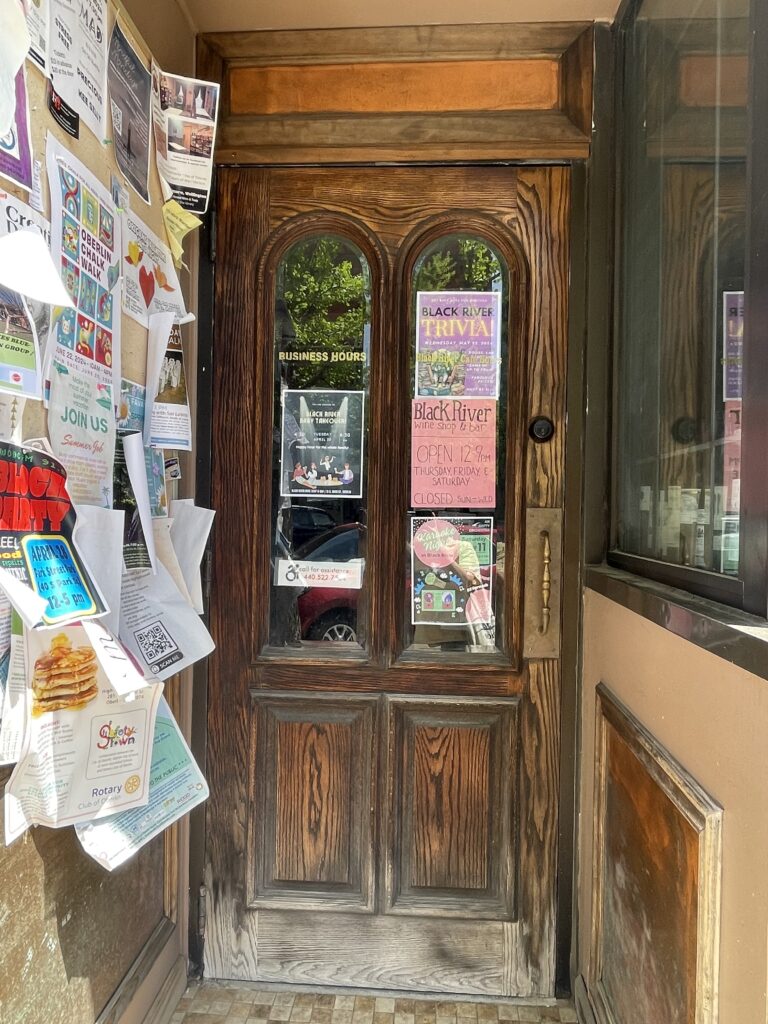
When Joe returned to Oberlin with plans of reopening Black River, the time he’d spent away had brought many changes. He was returning to Black River, yes, but now with a wife and plans for a family in the near future. Operating a restaurant seven days a week, serving three meals a day was not going to be feasible if he wanted to become a family man. Joe made the hours work around his availability, while balancing cultivating his family, rebuilding his Oberlin roots, and building a space for community members to come together at times they would be available to. That being said, Joe does have plans for expanding his hours and service. He wants to bring back dinner service in the future, and to be open more often in order to establish more of a presence in the town and to be able to host more community events.
In November 2023, Joe was elected as a City Councilor for the town of Oberlin. When we interviewed him in February, he filled us in on how his term had been so far, and why he’d run in the first place.
“Sure, yeah, it’s only been a few months. I’m definitely learning. I’ve thought about it forever. I guess I’ve always just been interested in civic engagement in some ways. I think when I’m in a place and I love the place and I want to be a part of helping it get better, I’ve also been in the place and seen some things that I’ve not loved over the years or not been super happy with… [and I think] ‘I don’t know why they do that or why not.’ So at some point I think you get to the point where you’re like, ‘oh, I can be annoyed about stuff or I can actually just, you know, start doing it myself as well.’”
Joe’s attitude towards improving the town is definitely shaped by his career in small business, and his beginnings in the town as a student. While he claims Ohio as home now, he’s conscious of the fact that he was not born and raised here.
“I come from the Oberlin College liberal, environmental, social, small business [mindset], and there’s a lot of people in this town who actually just really want a Burger King or something like that,” he commented, “Sometimes I feel like there can be a disconnect between actually wanting to support everyone in the community but then telling certain people that what they want is not right.”
Still, his experience as a business owner is informative towards his opinions and actions in local government. In true liberal arts grad fashion, Joe’s able to support his opinions for the direction of Oberlin: “I definitely would prefer to see Oberlin do the local business route,” with evidence and fact: “I like local businesses because of the multiplier effects, because you keep dollars in town, because more money stays in the community than chain restaurants where they don’t.” As a compromise, he suggested integrating an “alternative regional business,” like Spudnuts Donuts, rather than a chain like Dunkin’ Donuts.
His investment in community life doesn’t stop with economics, and it doesn’t stop with city council. Recently, Joe threw a drag show at Black River as a fundraiser for Oberlin Community Services, as well as previous fundraisers working with the Historic Society at Oberlin, and helping local churches with their kitchen design, and more. Joe also talked about his desires for the college and the town to become more intertwined, such as the college hosting an employment program for students to get involved in the local businesses.
“I would love to see a little more collaboration with the college and the city. I know there are some programs, but I kind of have this broader, long-term idea of creating almost a department within the college that has a higher level, where students can get credit by working within different community agencies or with different groups.”
Joe’s positionality as a former student-turned-townie gives him a multifaceted perspective on the relationship between the town and the college. It’s important that Oberlin has people like Joe who are imagining a future in which the college and the town work together for the benefit of both.
Joe discussed with us his desires for future collaboration with Kendal at Oberlin, the local retirement home, and his hopes to plan more events and fundraisers to provide a space for townspeople to socialize and come together in community. He emphasized that he has always wanted to employ both townspeople and students in order to enforce equal opportunities for both groups, and his primary focus when it comes to stocking products and sourcing ingredients is sustainability. Joe’s return to Oberlin and reopening of Black River is part of the work being done to keep Oberlin unique and represents a common theme in the discussion around Oberlin’s community—a unification of town and gown.
This article was written by Lily Hessekiel, Lily Dodson, and Ella Bezkorovainy.
