Pub and Bar Culture in the U.S. and U.K.
When I turned 21 last December while at home in Portland, Oregon for winter break I was thrilled for my first (legal) experience out on the town and excited to finally graduate into adulthood. A group of friends and former coworkers in their late twenties and 30s made sure I had a night worthy of a 21st birthday, taking me to some of their favorite karaoke bars and gay dance clubs in the city. I felt empowered and liberated by my new status as a card carrying adult and I was excited at the prospect of many more nights out like it. Then, only eleven days later I left the United States for a semester studying abroad at the University of Edinburgh, having gotten to experience American bar culture and nightlife only once before leaving the country for six months.
Scotland is a country with a strong and notorious pub/ drinking culture that I would quickly immerse myself in, and a place where I had already surpassed the legal drinking age over three years prior. Thrilled to be an independent adult in a city with a pub on nearly every corner – if not a little disappointed that my newly 21 year old status was practically meaningless in this new land – I set out with my new best mates on a mission to fully understand the Scottish culture by drinking as many local ales and lagers on as many nights of the week as we could at any pub with a decent student deal, live music, or the NFL playoffs on TV. Going out in Edinburgh, I was astonished by just how comfortable and at home I felt in pubs, bars, and clubs, places I expected to feel intimidated, inexperienced, and unwelcome. Based on my limited experiences in American bars, they were places where I felt questioned and looked down on as a naive and inexperienced young person, but in Scotland it felt like pubs and bars were places I was supposed to be. Walking into a pub in Scotland, I never felt like my presence was questioned or even considered; pubs were filled with people of all ages, university students who looked and dressed like me drinking alongside off shift construction workers, locals, and academics.
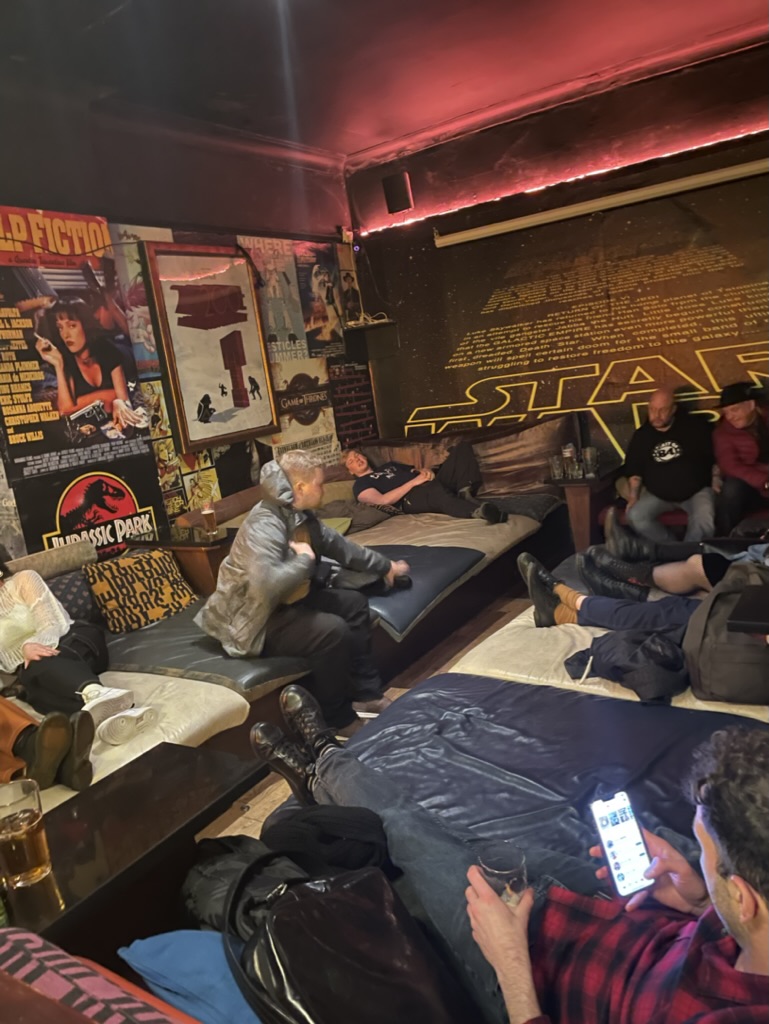
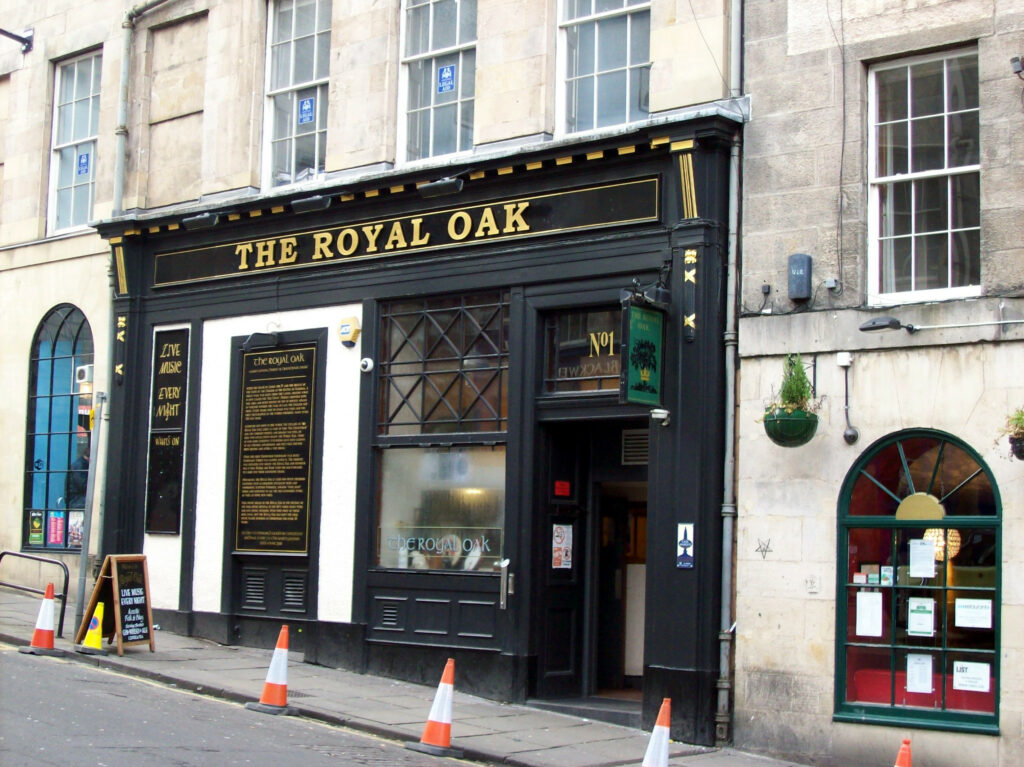
My friends and I quickly established a circuit of charming pubs and bars that we frequented on a near weekly basis, each with their own unique quirks and characteristics. The first find of our trip was The Royal Oak, a standard British pub right off Edinburgh’s Royal Mile with a narrow bar and floor space so small that the live bands they hosted on Thursday nights were forced to play amongst the high tables and benches filled with patrons. Stramash, a live pub and music venue with live bands every night of the week became another mainstay of our time in the city. Drawing an evenly mixed crowd of boisterous university students and hammered moms to funk bands with personalities so cartoonish we couldn’t help but return week after week. Strange pubs with gimmicky vibes caught our attention too, like The Doghouse with its ceiling adorned with a bizarre assortment of lampshades, bird cages, and baby dolls, or The Brass Monkey that boasted a back room covered in classic film posters and filled with beds and pillows.
One pub however stood far and above the rest in the hearts and minds of our crew. The Southsider, a classic British pub right off campus with an outrageous student deal – £2.75 for a domestic pint – that we quickly became regulars at. The pub became iconic within our larger friend group, with nothing more than a simple “southsider” text in the group chat, everyone would drop whatever they were doing at the time to meet up, chat, relax, and watch a premier league match over a few pints. We relished the thought of establishing ourselves as known regulars of the establishment – dubbing ourselves “parts of the furniture” after hearing a few locals use the term to refer to a particular pair of old chaps who occupied the same booth most days of the week. The Southsider filled almost every social need in our lives; after class hangouts, a stop after dinner to extend the conversation, somewhere to have a couple drinks to start the night before going elsewhere. We brought everyone to The Southsider – first dates; college friends visiting from their semesters abroad; second dates; parents, siblings, and uncles; third dates – even though we were in a foreign country, we felt comfortable and in our element there and we welcomed others into Southsider as if it was our home.
Coming back to the United States last summer, I was excited to explore American bar culture in a way I hadn’t been able to in my prior 11 days of American adulthood. However, with my expectations of pub and bar culture high after my experiences in Edinburgh, I found disappointment after disappointment in Portland. From dive bars on nights out with my high school friends to upscale breweries with older millennial friends and the “iconic” after work spot with coworkers after a long days leading climbing and kayaking trips, every bar I went to was too expensive, too foul, or just completely lacking in energy or vibe.
Breweries I went to in Portland’s affluent Pearl district or on the inner east side of the city were filled with millennial tech bros and business people from fancy marketing firms going for a drink after work. They huddled in groups around tall rough hewn standing tables and glared with distaste at me in my dirty sandals and grubby t-shirt, refusing to budge even an inch to let me through to find my friends. I felt as if my presence was questioned and under scrutiny. I felt much more comfortable and accepted in the divy-er bars in my neighborhood I went to with high school friends, but they lacked the warmth and ease of a pub like the Southsider. They were dark, dimly lit, and either far too loud or quiet for extended private conversations. Worst of all, they were either mostly empty or completely homogenous in their patrons, the latter usually being frat boys home from the University of Oregon for the summer, or groups of Gen-X Portlanders with stained flannels, unkempt graying beards, and trailblazers graphic Ts. In Edinburgh pubs, I felt comfortable and at home because of the diversity in age and lifestyle present, whereas in Portland bars the lack of diversity made me feel like I needed to fit in and lacked the ability to do so.
Most of all, at most places I went, there were almost no young people. I was usually on the younger side of the clientele in Edinburgh bars, but because of the UK’s drinking age I was never the youngest and depending on the venue I often felt like I was even well above the median age; in Portland I was not only the youngest, but it felt as if my friends and I were the only ones of our generation in these establishments at all. In Scotland pubs and bars, people of all ages drank, laughed, and danced together – in Portland the generational divide was apparent and stark.
My most impactful take away from my experiences in both countries over the past year, is just how much more welcoming a city feels when it has a wealth of casual public spaces like pubs and bars with open doors to all. As Ray Oldenburg describes them, “Informal public gathering spaces,” like the many pubs of Edinburgh, “become as much a part of the urban landscape as of the citizen’s daily life and, invariably, they come to dominate the image of the city.” Much of the ways we experience cities is through the bars, restaurants, and businesses that line their streets. Invariably, if these places are filled with obnoxious tech bros who frown down upon you, believing that the bar belongs to them, your impression of the city will be as such. Cities need diverse and radically welcoming spaces to thrive. Without them, they doom their neighborhoods into the snobbish homogeneity of Portland’s upscale wine bars and breweries.
The only night out that contradicted this experience was the most recent New Years Eve that I spent out in Portland’s Mississippi street bar district where I felt truly surrounded by young people from ages 21 to mid 30s. I met university students, reconnected with folks from my highschool, and ran into old elementary school friends back home from college with their partners. It was the first time back in the United States that I felt anything close to the nightlife atmosphere of Edinburgh’s pubs and clubs that I had loved so much. What I came to realize, or at least hypothesize, is that the casual pub/drinking culture I loved so much in Scotland, and that I see older adults in the professional class enjoying, is only a part of American culture – or at least Portland’s – for older generations. Gen-Z is still drinking and going out, but when they do it for an occasion, they’re going hard, not a casual evening with friends on a weeknight.
Research shows that while Millennials and Gen-X may frequently go to a pub or bar for a quick drink multiple times a week, as I grew accustomed to in the UK, Gen-Z drinkers go out far less frequently but drink much more when they do. A survey of Gen-Z drinking habits corroborates this story with 49% of respondents agreeing with the statement “I don’t drink that often, but when I do I drink a lot”. Going out for a drink after school or work simply isn’t an accessible form of socialization for many young people because the barrier to entry, the cost of admission, is too high. Edinburgh, one of the wealthier and more expensive cities in the United Kingdom, still manages to draw a significant young and low income crowd into bars and pubs on a daily basis because of establishments’ commitment to cheap drink options and subsidized prices via student deals.
In general Gen-Z is drinking less, according to recent studies, only 30% of Gen-Z drinks on a weekly basis in comparison to Baby Boomers who nearly double that number at 58%. For previous generations, socialization and community gathering has been closely tied to alcohol consumption, a trend that Gen-Z appears to be straying from. Thus, the go to meeting place for casual Gen-Z hangouts has shifted away from pubs and bars to other locations, explaining the vacancy and lack of peers I often experience at pubs in my hometown.
Another significant factor in the equation for Gen-Z bar-goers is the cost of going out. For most young people in the United States, the high cost of drinking when out at bars and clubs is far too great for their student/ young adult budgets. Our generation is graduating into an economy with an incredibly high cost of living, rising inflation, and low wages for many recent graduates; with most of our budgets so tight, it is often difficult to justify spending a large chunk of our paychecks on a single night out. A round of watered down mixed drinks plus tip skyrockets over the $50 mark in an instant at most bars and clubs, a tally most young folks simply can’t justify. Many in our generation are opting to ‘pregame’ with friends before going out, drinking at home with a small group beforehand to lower the cost actually spent at bars and clubs on drinks with heavily marked up prices. Still others are choosing not to go out at all, preferring a night in with friends or a smaller house party where they can source their own alcohol at a lower price.
As I leave my small college town and move back to a city once again, I fear I will be in desperate need of a true third place outside of work and home to waste away my hours as I did so often at The Southsider. A place where I’m as likely to strike up a conversation with someone my age as I am with a retiree. A truly all purpose place that fits my needs no matter who I’m with, the time of day, or how long I’m staying. If I find myself living in a city with a place like The Southsider again in my life, I don’t think I’ll ever be able to leave.
References
“Is Gen Z the Most Sober Generation?” Addiction Resource, January 2, 2024. https://www.addictionresource.net/blog/is-gen-z-the-most-sober/#substance-abuse-statistics.
News.com.au. “Gen Z or Millenials, Which Generation Parties Harder? – New Study Has the Answer.” New York Post, July 22, 2023. https://nypost.com/2023/07/22/inside-gen-zs-surprising-post-pandemic-priorities/.
Oldenburg, Ray. The Great Good Place: Cafes, coffee shops, bookstores, bars, hair salons, and other hangouts at the heart of a Community. New York: Marlowe and Company, 1999.
Reed, Chris. “Gen Z Creators Explain Why They’re Drinking Less in Bars.” 97.3 The Dawg, 2023. https://973thedawg.com/ixp/29/p/why-gen-z-drinking-less/.
