The first time my mom cooked Huauzontle there were many reasons why I did not want to try it. First of all, it did not look very appetizing. It looked like a red plant wrapped in something yellow that looked like an egg. Something else that threw me off was the fact that I was going to have a plant for dinner. The only plants I had ever tried to that point were in tea and I strongly dislike tea. I associated the bad flavor in tea with the plant. When I tried it, I was surprised. It had the perfect amount of spice, the texture was good, and the egg made it better. Huauzontle is a dish that I had never heard or seen before so I was very curious to learn more about it. I asked my mom about how she learned how to make this dish and she told me that my dad’s mom taught her how to make it. She also did not grow up eating Huauzontle and did not know how to make it before she met my dad. After this information, I immediately called my grandma who I call Mama Chela to ask her more about this. After talking to my grandma I realized how cultural dishes like Huauzontle are important to connect people but also connect people to their home country. My grandma is a carrier of cultural knowledge because she learned this recipe from her mother and has been passed over to different generations. In addition, Huauzontle is a form of resistance to creating a home and belonging in the United States.
Huauzontle is a dish that reminds Mama Chela of her childhood back home in Mexico. She mentioned that her mom taught her how to make this dish and they would eat it very often. As a kid, my grandma lived in a rural area where many plants will grow. Her family specifically planted Huauzontle in around May because that is when it will mostly rain. It will then grow around June and August. My grandma mentioned,
“I remember I was the one in charge of planting it, taking care of it, and cooking it. I hated the long process it took to cook but I had to do it. We had 10 mouths to feed.”
Mama Chela was one out of 8 siblings and because she was one of the older girls she had to help with the cooking and cleaning. Her family followed many traditional roles. Since she came from a big family, they had to cook dishes that would fill them up but were also affordable. Huazontle was one of them. They did not have to buy the plant, and the rest of the ingredients were pretty affordable because they did not contain any meat. However, when she moved to the United States that changed. Huazontle was not very accessible in Chicago because stores did not have this product so she stopped making it.
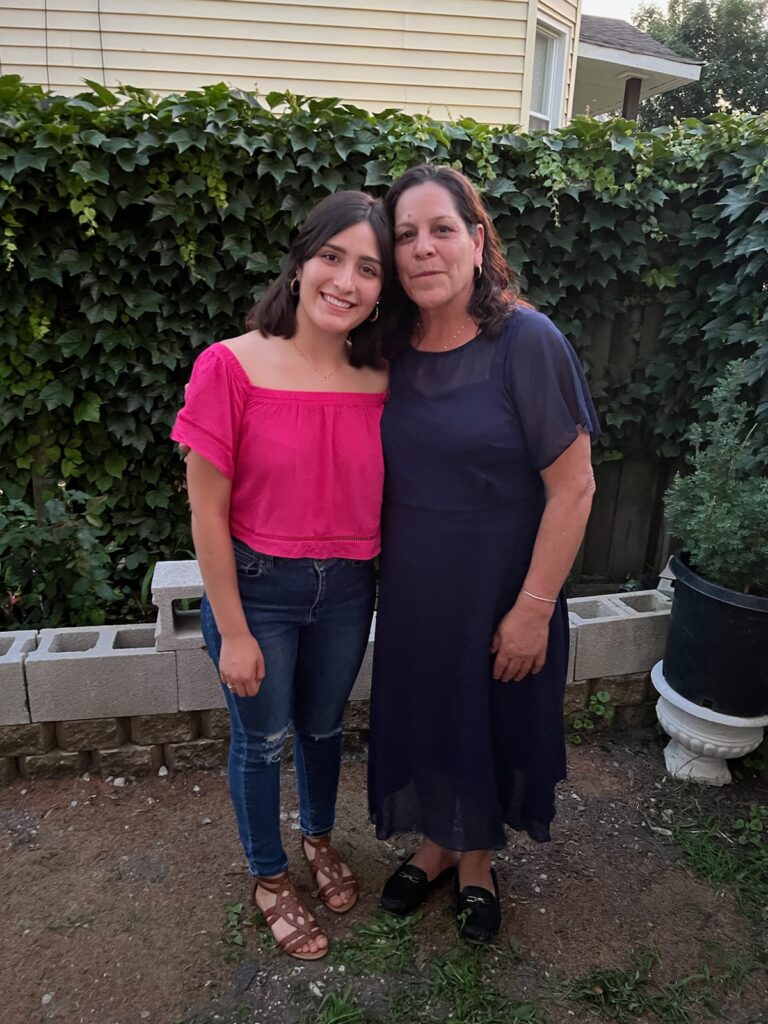
My grandma came to the United States at the age of 25. Her husband and 5 kids were in The United States waiting to reunite with her. Coming to The United States was a challenge on its own but she never considered the challenges she was going to face once she was here. Mama Chela came to the United States in the early 2000s right after 9/11 which was a time when more immigration laws were enforced to stop immigrants from entering the country. In 2005 the Border Protection Act was passed by the House of Representatives to prevent immigrants from coming to The United States. Laws and policies were not the only things that made immigrants not feel welcome. The limited availability of Mexican food also created a lack of belonging.
She has expressed how finding Mexican ingredients during this time was hard. It was hard for her to even find tortillas so she had to make them herself. Since there were so many limited ingredients it was also difficult to make certain dishes like Huazontle. She did not make Huazontle for a long time because she did not have everything she needed. It wasn’t until they established a small Mexican corner store where she lived that she was able to find more ingredients from back home. This is the same corner store where we would find other cultural and ethnic ingredients. As time passed many of these ingredients started being sold in bigger grocery stores like Petes Fresh Market or El Guero Market. She was then able to cook Huauzontle again. My grandma mentioned,
“and today it is more expensive to make so I try to not make it so often either”.
Although they were not a family of 10, they were a family of 8 and things were more expensive overall than back home. She still had to make dishes that were good but also accessible/not too expensive to make. After hearing this story I was really curious to learn more about Huazontle. I asked friends and family but no one seemed to know about this. When I told my grandma that no one that I knew had eaten this she was surprised too. She responded, “One time I went to Petes to buy the Huauzontle. When I was packing it in a bag a young girl approached me and asked me how I cooked it. She said she had seen it before but had no clue how to make it so I tried my best to explain it to her.”That made me even more curious so I decided to look into the history of Huauzontle to learn more about how Huauzontle connects to my ancestors. I wanted to learn about where it grows, how it has been eaten in the past, and if it is grown in other parts of the world.
Huauzontle is an edible plant that is native to Mexico and was commonly used by the Aztecs. People know it by different names, one of them being “Aztec Broccoli”. It is important to decolonize our diets to connect more to our ancestors and resist oppression by cooking dishes like Huauzontle.
“Food connects us to our ancestors, the land, and our bodies” (Luz Calvo And Catriona Rueda Esquibel 125)
Learning the history of these plants teaches us about our ancestors and connects us more to our roots. Plants were significant to Aztec communities because they were used as a way to pay annual tribulus to their central government but also used for religious ceremonies (Wilson and Heiser 1). Some documentation shows that one of the most important annual payments was 160,000 bushels of dicotyledonous, which is also known as huauthli (Wilson and Heiser 1). However, the use of this crop was suppressed by the Spaniards and was replaced as an agricultural commodity after the Mexican conquest by domesticated grasses. Due to this transition, it was harder to get more information on the uses of huathli. Huaunzontle specifically has a similar structure to other plants. It is believed that this plant has been hybridized because it has similar characteristics to the quinoa population. There are also morphological similarities between Andean weeds and C. Hircunum which are both plants that mostly grow in South America. This shows potential migration patterns that could’ve been happening during this time. Aztecs have many names for seeds and plants with Uauhtli or Huauhtli which is where the name huauzontle originates from. This plant was mostly cultivated in states like Michoacan, Oaxaca, and Ve Lipas. My family is from Maravatio Michoacan which is located further South of Mexico. My grandma lived in a very small town up a hill where it was easy to plant these plants. Huauzontle is from the same family as amaranthus which has reddish seeds and is also grown in parts of Mexico as well as Guatemala (Sauer, Jonathan Deininger). Mama Chela remembers seeing red Huauzontle at her aunt’s house. She said, “I remember I went to her house and when I cut the Huzontle in half it was red. I did not eat because I did not like how they looked. The crazy thing is that they tasted the same.”There have been drawings made in the 16th century that show different versions of this plant that show how these plants are part of the same family.
As mentioned before these plants were important for cultural practices. For example, women in the Aztec society used amaranthus in tamales to offer it to the temples for their Gods. They are also placed in the graves of dead people (Sauer, Jonathan Deininger). This plant appeared during different offerings in different festivals for gods of flowers and gods of feasts. With these offerings, it was hoped that the sun would come for another 52 years.
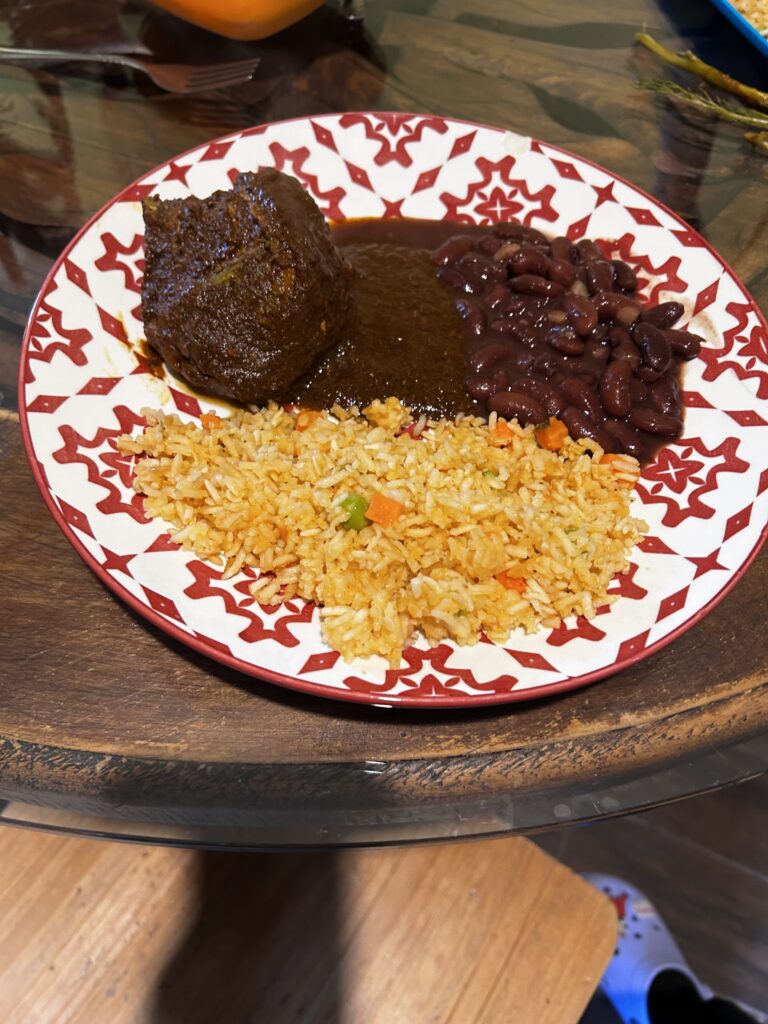
Interestingly this plant was also used as wheat. The Huauzontle was then used to make tamales and tortillas. This is very interesting because today Huauzontle is eaten inside of the tortillas as a taco. Corn is usually used to make the tortillas, not Huauzontle. For the most part, Huauzontle is now used as a vegetable for different dishes. My mom usually cooks the dish with black beans and rice on the side. To me, it seems like a healthy dish because it has protein, dairy, vegetables, and carbs. It reminded me of a chile relleno except it was not a pepper and it was spicier. Like other cultural dishes, women like my grandma are usually the ones cooking these dishes. Maria Galindo who is a famous Bolivian feminist argues that to decolonize, we must dismantle patriarchy (Clavo Esquibel 146). She argues that “similarly, we understand that as Chican@os, we cannot simply return to the plant-based, home-cooked diet of our ancestors without addressing gender oppression” (Clavo Esquibel 146). These activists are calling for a reconfiguration of gender and liberation in the kitchen. With that being said, these recipes are mostly passed down to other women in the family. My great-grandma passed the recipe to my grandma who passed it down to my grandma, who now is passing it down to my mom, me, and my aunt. As another way of resistance, we can start passing down this recipe to other males in my family like my dad, my brother, and my uncles. Women in my family don’t have to be the only ones carrying this cultural knowledge.
Huauzontle is a food that has been used by Indigenous groups and is now being cooked in my grandma’s and my mother’s kitchen. Throughout history, Huazontle has been a dish that has been colonized. As mentioned previously, when the colonizers came to certain parts of Mexico they changed this plant to an agricultural commodity and lost a lot of its value. In the United States, it did not even exist for a long time because it is not easy to grow here. Now it is for the most part shipped from other countries which makes it harder to find in stores and it is a more expensive vegetable. Even after all this, Mama Chela and all the women behind her learned the recipe and have been passing it out from generation to generation. I call that resistance. They have been carrying cultural knowledge so that no matter what part of the world they are, the recipe doesn’t get lost. Their future generations are still passing on these stories and empowering these dishes.
There are many Mexican ethnic/cultural foods. However, Huauzontle is unique because not many people know about this dish. There are many ways immigrants like my grandmother get discriminated against in this country and continuing these recipes is a way to resist that. Huauzontle is today eaten over family discussions, laughs, and a good time. It is a way to keep our family traditions alive. When my family migrated from Mexico they left so many things behind, including family, friends, traditions, and certain dishes. Having access to these things in The United States has been very helpful in creating a home in a place where sometimes it is so hard it feels like we belong.
Huauzontle Recipe
Ingredients
- 3 tomatoes
- 1 cup of Chiles Guajillo
- 1 cup of Chiles de Arbol
- The oil you prefer
- Half an onion
- ⅕ garlic
- Huazontle
- 3 eggs
- Knorr Granulated Chicken Bouillon
- 1 full bar of queso fresco
Prepare the Huauzontle
- Grab the Huauzontle and rinse it. Then boil it on a pan like it was broccoli. Leave it there for about 10 minutes.
While the Huauzontle cooks prepare the salsa
- Place tomatoes, a handful of Chile Guajillo and a handful of Chile de Arbol in another pan. Let it boil with garlic until everything it soft.
- Once everything is boiled, add it to the blender. Then add one spoonful of salt and Knorr Granulated Chicken Bouillon, ⅕ of onion and blend everything together.
- Cut some onion in circled.
- Add any oil you prefer to another pan. Then cook the onion for like a minute.
- After the minute add the sauce into this pan and let it sit there for 8-10 minutes.
Make the Huauzontle patties
- Get the Huauzontle you boiled out of the pan (no water) and let it cool down for 10 minutes.
- Cut queso fresco into small rectangles.
- Once the Huauzontle is cooled down, spread it and place a piece of queso fresco in the middle of the plant. After you place the queso fresco wrap the plant around the queso fresco and you should have a ball.
- Repeat this until you have all the Huazontle patties you want.
Cover the Huauzontle patties
- Have a pan with oil ready.
- Get a bowl and add the white part of 3 eggs (not the yolk).
- Blend all the eggs.
- Add the yolks of all the 3 eggs you used and blend again.
- Dip the Huauzontle panties in the blended egg so that they are all covered.
- Once all the Huauzontle patties are covered add it to the sauce you had made at first.
- You can add beans and rice on the side. Enjoy your Huauzontle.
References
Calvo, Luz and Rueda Esquivel, Catriona, “Mexican-Origin Foods, Foodways, and Social Movements.” University of Arkansas Press, www.uapress.com/product/mexican-origin-foods-foodways-and-social-movements/. Accessed 17 May 2024.
Dressler, Robert L. “THE PRE-COLUMBIAN CULTIVATED PLANTS OF MEXICO.” Botanical Museum Leaflets, Harvard University, vol. 16, no. 6, 1953, pp. 115–72. JSTOR, http://www.jstor.org/stable/41762151. Accessed 21 Mar. 2024.
Garcia, Hugo S., et al. “Evaluation of a Pseudocereal Suitability to Prepare a Functional Fermented Beverage with Epiphytic Lactic Acid Bacteria of Huauzontle (Chenopodium Berlandieri Spp. Nuttalliae).” LWT 155 (2022): 112913. Web.
Piedra-Malagón EM, Sosa V, Angulo DF, Díaz-Toribio MH. Edible native plants of the Gulf of Mexico Province. Biodivers Data J. 2022 Jun 3;10:e80565. doi: 10.3897/BDJ.10.e80565. PMID: 36761610; PMCID: PMC9848560.
Langlie, BrieAnna S., et al. “Agricultural Origins from the Ground up: Archaeological Approaches to Plant Domestication.” American Journal of Botany, vol. 101, no. 10, 2014, pp. 1601–17. JSTOR, http://www.jstor.org/stable/43827173. Accessed 27 Feb. 2024.
Safford, W. E. “Chenopodium Nuttalliae, a Food Plant of the Aztecs.” Journal of the Washington Academy of Sciences, vol. 8, no. 15, 1918, pp. 521–27. JSTOR, http://www.jstor.org/stable/24521339. Accessed 27 Feb. 2024.
Wilson, Hugh D., and Charles B. Heiser. “The Origin and Evolutionary Relationships of `Huauzontle’ (Chenopodium Nuttalliae Safford), Domesticated Chenopod of Mexico.” American Journal of Botany, vol. 66, no. 2, 1979, pp. 198–206. JSTOR, https://doi.org/10.2307/2442525. Accessed 27 Feb. 2024.
